
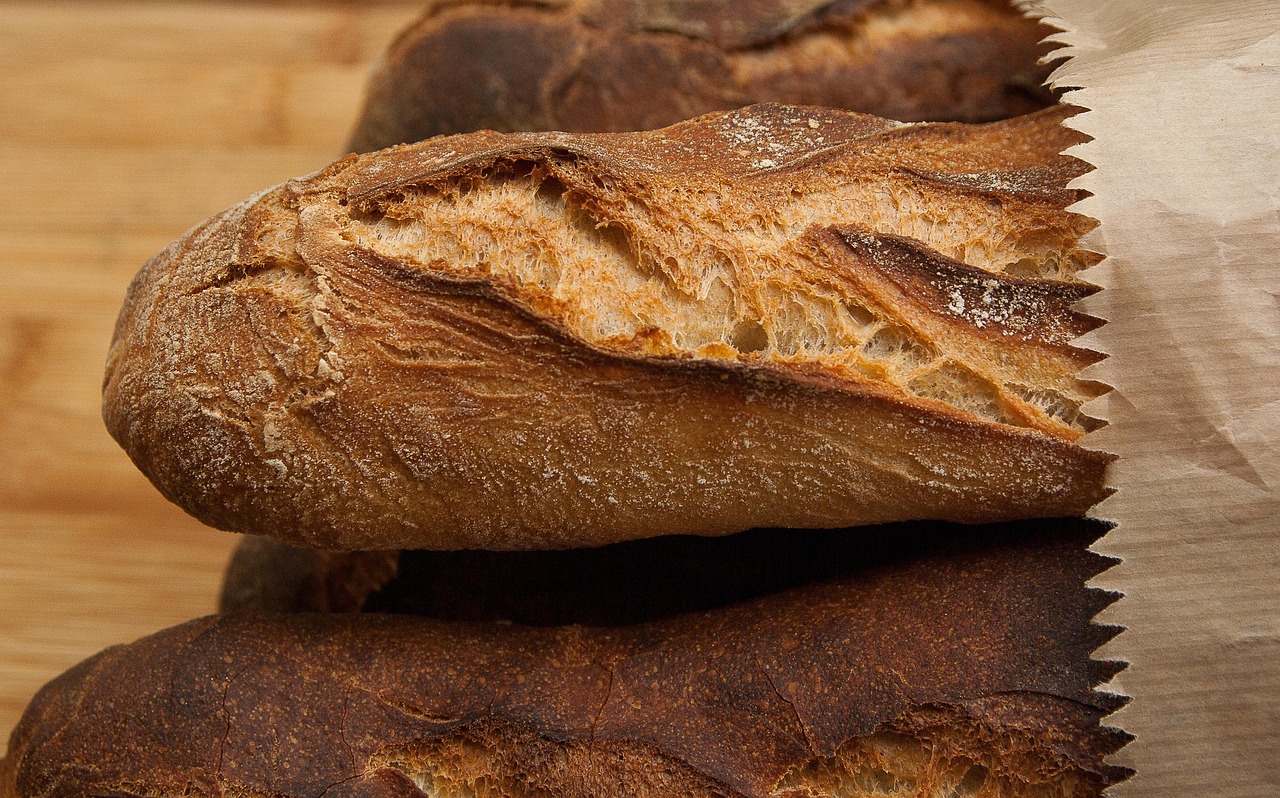
You can’t visit France without falling in love with a French baguette. But step into any boulangerie and you’ll quickly realize that bread in France is a whole universe of its own: dozens of shapes, flours, and names, each with its own personality.
Whether you’re planning a language trip to Paris or already dreaming about your next croissant, this guide will walk you through the essential French bread vocabulary you need to know before you order. And if you’d rather learn this vocabulary the fun way, standing at a real Parisian boulangerie counter, baguette in hand, keep reading to the end, because that’s exactly what we do at ACCORD Paris.
Your Guide to the Boulangerie
Breads are classified according to the flours used
- brown bread
- white bread
- wholemeal bread
French legislation classifies breads based on their composition and production method: traditional French bread, homemade bread, sourdough bread, wood-fired bread, artisan-style bread, country-style bread, rye bread, bran bread, wheat bread, and standard French bread.
Baguette-Style French Breads
The baguette is the icon, but it has plenty of relatives.
- Une baguette: the classic French bread stick, long and thin with a crisp crust. In fact, the Belgians call it “French bread”, so commonplace is it in our country. Bakers offer it in a variety of specialty baguettes: seeded, épi (sheaf-shaped), fournée, amourette…
- Une baguette tradition: made according to a strict standard, without additives, featuring a more pronounced flavour and an open, airy crumb.
- Une ficelle: This narrower version is as long as a standard baguette but weighs half as much.
- Un pain: bigger and heartier than the baguette.
- Un bâtard: literally “bastard,” because it sits between une baguette and un pain in size.
- Une baguette sarmentine: a loaf with four-pointed ends, giving bread lovers extra crust to enjoy.
- Une baguette viennoise: a sweeter baguette, often studded with chocolate or nuts, and noticeably smaller than the original.
Other Types of French Bread
Beyond the baguette family, French bakeries offer plenty of variety.
- Un pain rond: a round loaf.
- Un pain complet: whole wheat bread.
- Un pain de campagne: a round loaf with a thick crust, often made from a blend of wheat flour, rye flour, and natural sourdough starter.
- Un pain viennois: mild and enriched with milk, butter, and sometimes sugar.
- Un pain de seigle: rye bread, traditionally served with oysters.
- Un pain au levain: characterized by long fermentation, a dense and slightly tangy crumb, and a longer shelf life.
- Un pain aux céréales – aux graines: bread studded with whole seeds.
- Un pain aux lardons: bread loaded with bacon bits.
- Une fougasse: a flatbread originating from the south of France, often flavoured with olives and herbes de Provence.
- Un pain de mie: A soft, rectangular white bread, often eaten in slices. The perfect sandwich bread. You find it in many bakeries, but the supermarkets usually offer a wide selection of this bread.
What is a “biscotte”?
Une biscotte is a dry, twice-baked bread that almost every French household keeps in the cupboard, the emergency backup for when the fresh bread runs out. Not quite a bread, not quite a cracker, it’s a small but essential part of French food culture. Its name, biscotte, is a borrowing from the Italian *biscotto*, composed of the prefix bis– and cotto, the past participle of *cuocere* (to cook), meaning “cooked twice”.
Essential Bread Vocabulary
Before you order, it helps to know how the French actually talk about bread itself.
- La mie: the soft, white interior of the bread.
- La croûte: the crust, the crunchy outer layer.
- Le croûton: the very end piece of a baguette, prized by many French people as the best bite of all, since it’s all crust.
Sweet French Bread Specialities
No trip to a French bakery is complete without exploring les viennoiseries, the sweet cousins of everyday bread.
- Un croissant: the buttery, flaky classic.
- Un pain au chocolat : a pastry filled with chocolate.
- Un pain aux raisins: a spiral pastry with vanilla cream and raisins.
- Une brioche: soft, fluffy, and slightly sweet bread.
- Un chausson aux pommes: a pastry filled with stewed apples.
- Un pain au lait: similar to a brioche, but with its own distinct texture and taste.
- Un palmier: a caramelized, palm-leaf-shaped puff pastry.
- Des chouquettes: Small choux pastries sprinkled with pearl sugar. Light and airy, they are perfect for snacking on at any time of day.
Boulangerie or Pâtisserie: What’s the Difference?
Many French shops combine both specialities under one roof: une boulangerie-pâtisserie. But technically, they’re two different trades.
Une boulangerie is where you’ll find bread, baguettes, loaves of every shape, and the sweet viennoiseries too. Une pâtisserie, on the other hand, is dedicated to cakes and pastries.
Now you know exactly what to ask for on your next trip to a French bakery, and you’ll understand what the baker means when they ask whether you’d like it bien cuite (well baked) or not!
Learn French in Paris — And Taste It Too
Reading a vocabulary list is one thing. Standing in a Parisian boulangerie, smelling warm bread, and confidently asking for une baguette bien cuite or un pain aux raisins in French is another experience entirely, and it’s one of the joys that makes learning French in Paris so rewarding.
At ACCORD Paris, our French language courses for adults go beyond grammar and textbooks. Just steps from the Eiffel Tower and in the lively 15th arrondissement, our students practice real, living French every day, including the exchanges that happen at the bakery counter, the market, and the café terrace. Vocabulary like this isn’t just something to memorize, it’s something you’ll use every morning before coming to class or during the break, sampling a fresh croissant or a warm croissant or a pain au chocolat with your coffee.
So why not turn this bread vocabulary list into your first real conversation in French? Join us at ACCORD Paris, immerse yourself in the language, and discover that the best way to learn French is to live it, one boulangerie visit at a time.
