
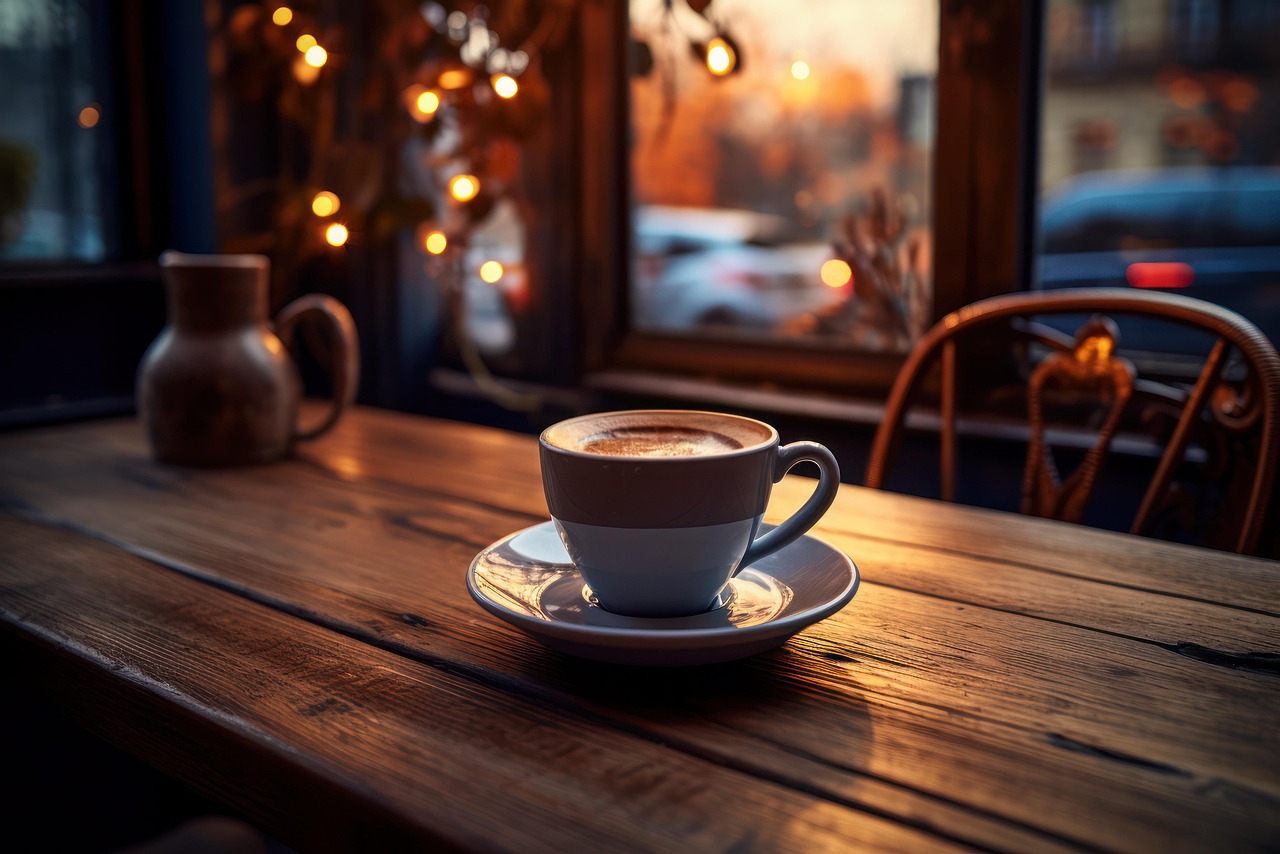
How to Order Your ‘Café’ Like a True Parisian
One morning, push open the door of a Parisian bistro and you’ll always see the same scene: a customer leaning on the counter, a small black coffee in front of them, a croissant next to it, and a newspaper or phone in hand. In France, coffee isn’t just a drink to wake you up: it’s a real ritual, an institution. People have it before work, before class, between two appointments, or simply to give themselves a break at the counter.
But here’s the catch: when it comes time to order, the coffee menu can quickly turn into a headache for a foreign student. Espresso, noisette, allongé, crème, macchiato… Each word refers to a very specific preparation, and mixing them up can surprise the waiter, or make you miss out on the coffee you were really dreaming of. Don’t panic: this guide will teach you to order your coffee with confidence, as if you were a local.
The counter classics
Here are the coffees you’ll find on (almost) every French bistro menu.
- An espresso (or expresso) – the classic: short, strong, with a beautiful golden foam on top.
- A double expresso – simply double the coffee in the cup, for mornings that need a bit more.
- A café serré, or ristretto – an espresso even shorter and more concentrated than a classic espresso, with less water and therefore a more intense taste.
- A noisette – an espresso with a small amount of hot milk or foam added, just enough to give it its “hazelnut” (noisette) colour.
- An allongé – an espresso with extra water added. The more allongé (stretched) a coffee is, the longer the water runs through the coffee grounds, which makes its taste more bitter and its caffeine content higher than that of a plain espresso.
Milkier coffees, for a softer taste
If you prefer a rounder, milder coffee, head to this category.
- A café au lait – an espresso with a large amount of hot milk and a thin layer of foam. A little anecdote: café au lait is said to have been born in France in 1685. Coffee made its first appearance in France in 1644 in Marseille, but it really became popular when Louis XIV discovered it in 1669. Quickly labelled a “noble” drink, it charmed the Sun King and his courtiers. Since coffee remained very bitter, sugar and honey were first added to it. It was in 1685 that a court physician had the idea of softening this coffee, “black as the devil,” by adding white milk — and café au lait, as we know it today, was born.
- A café filtre – slow-brewed coffee, giving a milder, larger, and less concentrated cup than an espresso.
- A crème – an espresso with a little cream or milk added. An insider tip: avoid ordering a “grand crème,” an expression that instantly gives away a tourist to Parisians!
- A cappuccino – an espresso topped with hot milk and a lovely layer of smooth foam, with a little cocoa powder sprinkled on top.
- A mocha – an espresso with chocolate powder or syrup, and frothy milk, for lovers of indulgent coffee.
- A macchiato – a coffee with a thin layer of hot milk foam added, literally “stained” with milk in Italian.
And in summer, why not order an iced coffee?
When temperatures rise, it’s hard to stay loyal to your piping hot coffee. Iced coffee is the perfect drink to cool off while still satisfying your caffeine craving: a tall glass, black coffee, ice cubes, and sometimes a little syrup are enough to create this star of the hot season.
You can also ask for your iced coffee with sugar, whipped cream, and syrup, to turn your coffee break into an even more indulgent, generous moment. This is what’s known as a café frappé.
The price: counter, seated inside, or terrace?
In France, the price of a coffee depends on where you drink it, not just its recipe. A coffee taken standing at the counter will always cost less than the same coffee served seated at a table, indoors or on the terrace. It’s a very French tradition: service and a seat come at a price, even for a simple espresso, so don’t hesitate to lean on the bar like the regulars.
Want to order (and understand) your coffee in real French?
Knowing coffee vocabulary is good. Ordering it with confidence, in French, right at the counter of a real Parisian bistro, is even better. That’s exactly what our students experience every day at the ACCORD French Language School in Paris, in the 15th arrondissement.
Our French language courses for adults aren’t limited to the grammar and vocabulary learned in class: they naturally continue in the streets around the school, between two bistros, a pastry shop, and a sunny terrace. Just steps from the school, our students love testing their freshly learned French by ordering “une noisette,” “un café allongé,” or “un crème” like true Parisians — and leaving with a little more confidence with every cup.
So, ready to trade your thermos for a real bistro counter?
Join ACCORD Paris, immerse yourself in French language and culture, and turn your next coffee into a real, life-size French lesson.
With ACCORD, it is not only about a French course, it is a life experience!
