
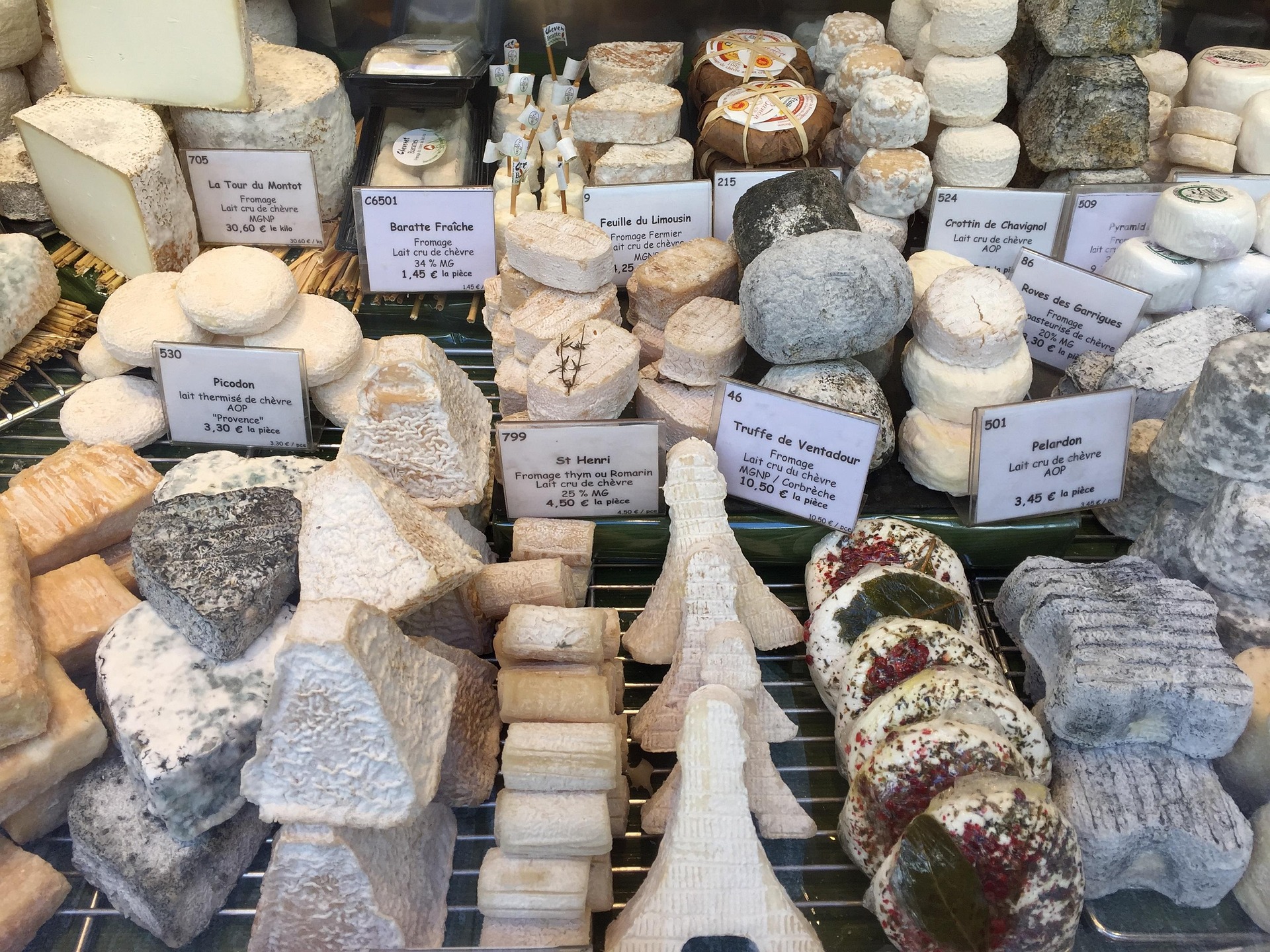
France, the kingdom of cheese: the French fromage top 20
“How can you govern a country that has 246 varieties of cheese?” Général de Gaulle’s words from 1962 capture the complexity and independent spirit of the French in the nation’s diverse gourmet heritage. The tally grew in the French mindset to 365 varieties, one for every day of the year, when Général de Gaulle (him again!) apparently also said: “A country that produces 365 types of cheese cannot lose the war.”
Fast forward to the present day and the number has exploded since the 1960s, with over 1200 or even 1600 types, as different varieties of the same cheese have been brought to market.
There are two things for sure:
- France is the world’s third biggest cheese producer and the undisputed leader in terms of regional diversity and AOP designations (Appellation d’Origine Protégée or Protected Designation of Origin).
- France is the world’s biggest cheese consumer, weighing in at around 26kg per year per person, a little over 2kg per month per person.
There are definitely over 1200 types of cheese in France, ranging from unpasteurised to pasteurised, hard cheese to cheese spread, cow’s milk to goat’s milk… Enough cheese for you to try a different one every day for over three years!
The French’s top 20 favourite types of cheese
Brie (de Meaux): Soft cheese with a bloomy rind from Île-de-France. One of the oldest types of cheese in France and called “the king of cheeses” at the Congress of Vienna.
Camembert: Soft cheese with a bloomy rind from Camembert in the Orne region of Normandy. Scroll down to find out more about camembert.
Roquefort: Blue cheese made using ewe’s milk and aged in natural cellars in the village of Roquefort-sur-Soulzon, in Aveyron. Diderot and Alembert named it “le roi des fromages”.
Comté: Hard, pressed, cooked cheese made from unpasteurised cow’s milk in the Jura region. The best-selling AOP cheese in France and the nation’s favourite in taste tests.
Emmental: The French eat more of this cheese than any other (over 150,000 tons per year) and tend to buy it grated, ready to use in their recipes. Its big holes make it easy to recognise.
Reblochon: Pressed, uncooked cheese from Savoie with an orange washed rind. The star ingredient in tartiflette.
Munster: Soft cheese with a washed rind from Alsace, famous for being strong in aroma yet mild in flavour.
Cantal: Pressed, uncooked cheese from Auvergne, one of the oldest types of cheese in France and sometimes called “cheddar’s French cousin.”
Crottin de Chavignol: Dinky goat’s cheese with a natural rind from Berry. The texture changes depending on how long it has been aged for.
Beaufort: Pressed, cooked cheese from Savoie known as “le prince des gruyères” and made at high altitude using milk from Tarine and Abondance cows.
Bleu d’Auvergne: Blue cheese with prominent green-blue veins made from cow’s milk. Milder than roquefort.
Saint-Nectaire: Pressed, uncooked cheese from Auvergne with a natural grey rind and an earthy flavour.
Époisses: Soft cheese with a washed rind soaked in Marc de Bourgogne, one of the strongest-smelling cheeses and a big hit among fromage fans.
Tomme de Savoie: Pressed, uncooked cheese with a sweet hazelnut flavour. Often less fatty than other mountain cheeses.
Mimolette: Pressed cheese from the North with an iconic bright orange colour and rough, grey rind.
Morbier: Pressed, uncooked cheese with a signature strip of black ash in the middle, hailing from back when the cheese was made in two stages.
Chaource: Creamy soft cheese with a bloomy rind and tangy flavour from Champagne.
Livarot: Soft cheese with a washed rind from Normandy. Nicknamed “le colonel” because of the dried reeds wrapped around the rind, reminiscent on the stripes on an army uniform.
Pont-l’Évêque: Soft cheese with a washed rind and classic square shape. One of the oldest cheeses from Normandy.
Ossau-Iraty: Pressed, uncooked cheese made using goat’s milk and from Béarn and the Pays Basque. Usually served with cherry jam.
Chat about cheese like a local
An un-brie-lievably useful glossary
The French have specific words for things like the pâte (texture), croûte (rind) and affinage (how it’s made or aged) to describe the flavour and feel of your fromage.
Texture:
- Pâte fraîche: Fresh, unaged cheese with a high water content (e.g. faisselle).
- Pâte molle: Soft, creamy, melt-in-the-mouth (e.g. camembert).
- Pâte pressée: Cooked/uncooked cheese pressed to remove water (e.g. cantal, comté).
- Pâte persillée: Veined with blue mould (e.g. roquefort).
Rind:
- Croûte fleurie: Soft white rind (e.g. brie).
- Croûte lavée: Smeared or washed in water or alcohol whilst ageing (e.g. munster).
- Croûte naturelle: Natural unwashed rind (e.g. crottin de chèvre).
How it’s made or aged:
- Caillé: Curds produced once the milk has coagulated.
- Présure: Rennet, a natural substance to help coagulate the milk.
- Affinage: The time the cheese spends ageing in the cellar to build flavour and rind.
- Persillage: Little blue or green veins in the cheese itself.
We just can’t camembert the suspense!
Camembert is named after the little Normandy village where the cheese is made. The village lies in the Pays d’Auge, an area famous for its lush grass and dairy cattle. The reputation cheese from the Camembert area was first mentioned in texts dating back to the early 18th century.
Legend has it that a local farmer called Marie Harel invented camembert in 1791. The story goes that she got the recipe from a priest who she hid during the French Revolution. The priest told her to use a similar ageing method to the technique involved in making brie.
Which cheese do the French call “le roi des fromages”?
The French call roquefort “le roi des fromages” after Diderot and Alembert gave it the nickname in the 18th century. Outside France, Italian parmesan is often called something similar whilst Brie de Meaux was named “the king of cheeses” at the Congress of Vienna.
What is France’s best-selling cheese?
Emmental is the biggest seller in France, closely followed by camembert and comté.
- Emmental: Over 150,000 tons sold annually in France. Often bought grated and ready to use.
- Camembert: Second in terms of sales volume (44,000-47,000 tons per year).
- Comté: The biggest-selling AOP designation cheese (Appellation d’Origine Protégée) and France’s favourite in taste tests.
In the name of fromage:
If there’s one cheese that will give you a giggle in French with its naughty play on words, it’s Le Trou du Cru. This little Burgundy cheese’s rind is washed in Marc de Bourgogne and its tongue-in-cheek name joins the likes of Clacbitou, Le Bouton de Culotte and La Boulette d’Avesnes.
“En faire tout un fromage”
The French expression, “en faire tout un fromage”, means to make a big stink about something (an apt translation given the subject matter) or make a mountain out of a molehill. It’s often used to put things in perspective, e.g. “Ce n’est qu’un retard, ce n’est pas la peine d’en faire tout un fromage !”).
The expression first came about in the 20th century and “en faire tout un fromage” refers to making milk into cheese. Milk is readily available, whereas it takes time, technique and craftsmanship to make cheese. So, “en faire tout un fromage” is about turning something basic, like milk, into something more elaborate and complex, like cheese.
Cheesy slang
How do you say cheese in French slang? The French tend to say frometon, fromton, clacos (or claquos) and calendos.
- Frometon: the cuter dimunitive.
- Clacos/Claquos: a common term often used to describe soft cheeses.
- Calendos: a nod to our famous camembert.
It’s your turn to cheese the day!
When it comes to French, ACCORD French language school in Paris is the place to brie! Now you know your stuff about twenty types of cheese and you have the lingo you need to wax lyrical about any cheese platter that appears on the table!
Make the most of your French course in Paris to sample, compare and ask for advice at the market, cheese shop or over dinner with your host family: the French love sharing their passion for cheese and you’re bound to get into a fascinating conversation about it (a golden opportunity to practise your spoken French too!).
Who knows, maybe you’ll find your own “roi des fromages” by the end of your stay in Paris.
