
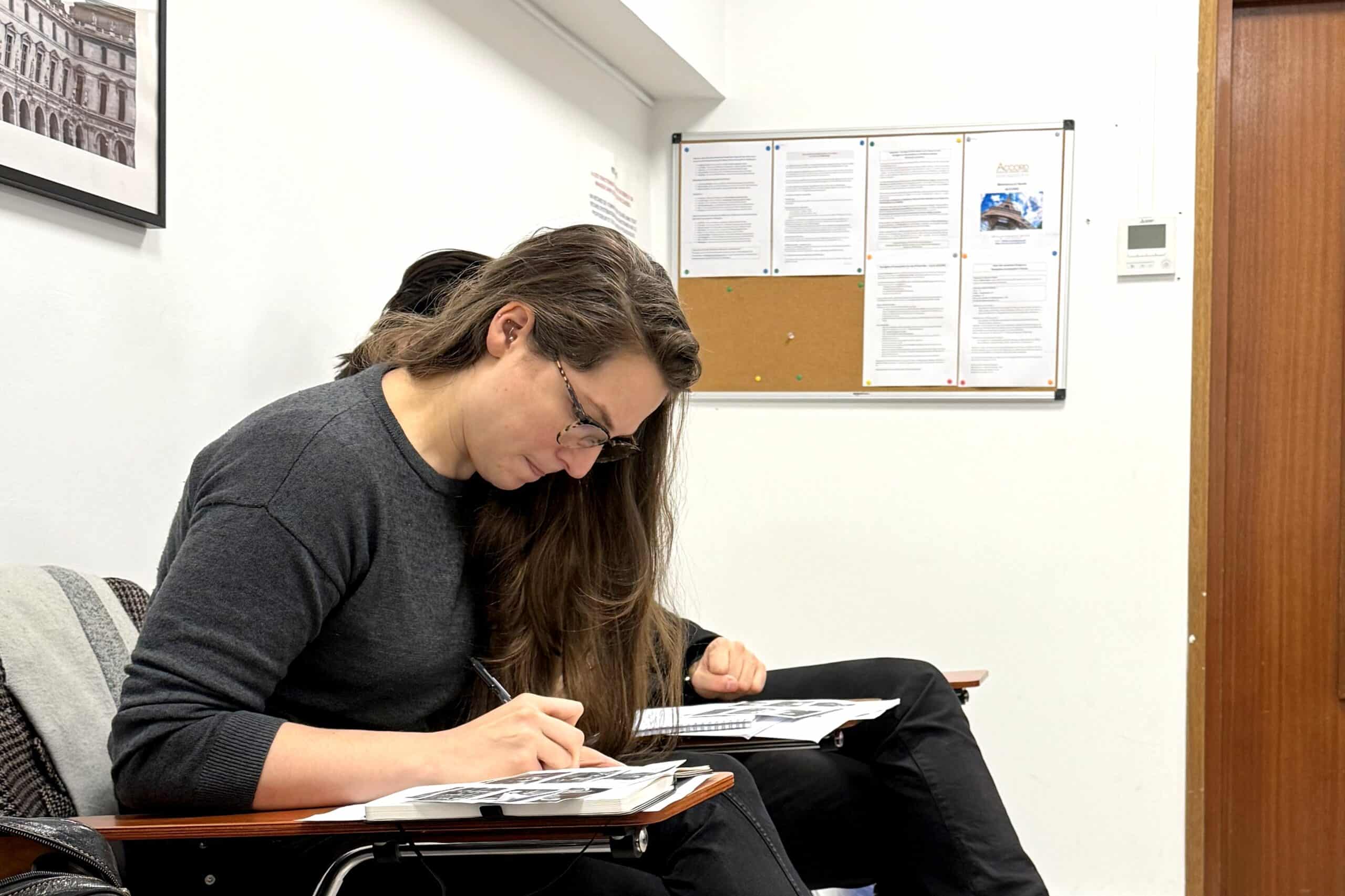
How to Take Notes in French: A Practical Skill Every Student Should Learn
Many students preparing to study in France focus on speaking, listening, reading and grammar. While these are essential skills, there is another ability that often receives far less attention, and yet can make a huge difference to academic success: taking notes efficiently in French.
Whether you are attending a French language course, a university lecture, a conference or a professional presentation, good note-taking allows you to capture the essential information without trying to write down every word. It helps you stay focused, organise your ideas and review your lessons more effectively afterwards. Learning how to take notes is therefore not simply a language exercise, it is an essential study skill.
Why is note-taking so important?
As a student, you’ll probably find yourself taking notes almost every day. But this skill is just as valuable in professional life.
You may need to take notes:
- during French language classes,
- at university lectures,
- during seminars or conferences,
- in business meetings,
- during interviews,
- while researching documents for reports, presentations or projects.
In every situation, your objective remains the same: identify the important ideas, organise the information clearly and make it easy to understand later.
Don’t write everything, write what matters
One of the biggest mistakes beginners make is trying to write every sentence they hear. Effective note-taking is not transcription.
Instead, learn to identify:
- the main ideas,
- key words,
- important dates and figures,
- definitions,
- conclusions,
- examples only when they are essential.
This requires active listening. Before writing something down, make sure you have understood its meaning. With practice, you will naturally learn to distinguish the essential information from supporting details.
Organise your notes from the very beginning
Well-organised notes are much easier to revise.
Before a class or lecture begins, remember to include:
- the date,
- the title of the lesson or presentation,
- the speaker’s name,
- the topic being discussed.
Leave generous margins or blank spaces so you can add explanations or corrections afterwards. Use headings, subheadings and indentation to show the relationship between ideas. A clear page makes revision much faster.
Develop your own system of abbreviations
One of the secrets of fast note-taking is learning to shorten words. Abbreviations save valuable time and allow you to keep listening instead of constantly writing.
As you continue learning French, you’ll gradually create your own personal system. The important thing is to remain consistent so that your notes are still easy to understand several days, or even several weeks, later.
Interestingly, many abbreviations used in note-taking are also common in everyday spoken French. In Paris, for example, nobody is surprised to hear words such as apéro, resto, expo or prof.
Common French abbreviations
Here are some useful abbreviations you can start using immediately:
- bcp : beaucoup
- déf : définition
- ex : exemple
- nb : nombre
- qd : quand
- qqch : quelque chose
- tjs ou tjrs : toujours
- expo : exposition
- resto : restaurant
- TV : télévision
- prof : professeur
- amphi : amphithéâtre
- ado : adolescent
- math : mathématiques
- sc : sciences
- édito : éditorial
- appart : appartement
- conf : conférence
- dico : dictionnaire
- apéro : apéritif
- hebdo : hebdomadaire
- fac : faculté
- cata : catastrophe
You’ll soon discover many more as your French becomes more natural.
Practice makes note-taking easier
Like speaking French, taking notes is a skill that improves with practice. The more often you attend classes, listen to podcasts, watch presentations or participate in discussions, the more quickly you’ll learn to identify key information and write it down efficiently.
Over time, you’ll develop your own style, your own abbreviations and your own way of organising information.
Improve your written French with ACCORD Paris
At ACCORD French Language School in Paris, developing strong written communication skills is an important part of learning French. Students wishing to improve their grammar, written expression and academic writing can join the French Grammar and Writing Course. This programme combines the Morning Intensive French Course (20 h/week) with three French grammar and writing afternoon lessons (Tuesday, Wednesday and Thursday). Open to all levels, from complete beginners to advanced learners, this course helps students write more accurately, organise their ideas more effectively and gain confidence in written French.
To complement these writing skills, many students also choose to add two afternoon Oral Communication lessons on Mondays and Fridays, allowing them to improve both their spoken and written French during the same stay.
Writing well means learning more effectively
Taking notes may seem like a simple habit, but it is actually one of the most valuable academic skills you can acquire. By learning to listen actively, identify key ideas and organise information clearly, you’ll not only improve your French, you’ll also become a more confident student, whether you’re attending a language course, studying at university or working in an international environment.
Mastering note-taking is another step towards mastering French itself.
