
Paris: A City to Read, Explore and Experience
There are many ways to learn French, but few are as enjoyable as getting lost in a good book. Reading French literature in its original language allows you to discover the richness of the French language, expand your vocabulary and become more familiar with the expressions and cultural references that make French so fascinating. And what better place to begin than Paris?
For centuries, the French capital has inspired writers, poets and storytellers. Its grand boulevards, narrow medieval streets, lively cafés, elegant apartments and historic monuments have provided the setting for countless stories. Paris is much more than the backdrop to these books: it is often a character in its own right.
At ACCORD Paris French language school, located near the Eiffel Tower, we believe that studying French is also about discovering the culture, history and everyday life of France. Reading a novel set in Paris before exploring its streets can make the experience even more rewarding. Suddenly, a neighbourhood becomes familiar, a monument takes on a new meaning, and a scene from a book comes to life before your eyes.
Whether you enjoy historical novels, social dramas, autobiographical stories or literary classics, there is a French book waiting to capture your imagination. Here are French writers, born in Paris and closely connected with the city, whose works offer a wonderful introduction to French literature and the many faces of the capital.
Marcel Proust: Discovering the Paris of the Belle Époque
Recommended reading: À la recherche du temps perdu (In Search of Lost Time), particularly Du côté de chez Swann (Swann’s Way)
Marcel Proust (1871–1922) is one of the most celebrated French writers of all time. Born in Paris, he captured the social world of the late nineteenth and early twentieth centuries with extraordinary sensitivity.
His monumental literary cycle, In Search of Lost Time, explores memory, love, jealousy, friendship and the passage of time. Through the narrator’s recollections, readers discover a world of elegant drawing rooms, aristocratic salons, family homes and sophisticated social gatherings.
Proust’s Paris is particularly associated with the fashionable districts of western Paris, including the area around the Madeleine and Boulevard Haussmann. These neighbourhoods evoke the bourgeois society in which many of his characters move.
Why read Proust in French?
Proust’s sentences can be long and intricate, but his writing offers a remarkable opportunity to appreciate the precision, musicality and expressive possibilities of French. You can begin with selected passages rather than attempting the entire series at once.
As you read, imagine walking through the Paris of the Belle Époque, when social conventions, cultural life and personal relationships shaped the rhythm of the city.
Émile Zola: Exploring the Birth of the Modern Department Store
Recommended reading: Au Bonheur des Dames (The Ladies’ Paradise)
Émile Zola (1840–1902) was a leading figure of literary Naturalism. In his novels, he explored how social conditions, money, ambition and the environment influence people’s lives.
In The Ladies’ Paradise, published in 1883, Zola takes us into the rapidly changing world of Parisian retail. The novel follows Denise Baudu, a young woman who arrives in the capital and finds work in an enormous department store. As the business expands, it transforms the lives of its employees, customers and neighbouring shopkeepers.
The story evokes the area around the Opéra and the great shopping boulevards of nineteenth-century Paris. Zola drew inspiration from the rise of department stores such as Le Bon Marché, which revolutionised shopping and helped shape modern consumer culture.
Why read Zola in French?
This novel is an excellent choice for students interested in everyday vocabulary, descriptions of shops and merchandise, and conversations about work, money and ambition. It also offers a fascinating glimpse into the social and economic changes that transformed Paris during the nineteenth century.
After reading, why not explore the city’s famous shopping districts and compare the commercial world of Zola’s characters with the Paris of today?
Eugène Sue: Uncovering the Hidden Side of Paris
Recommended reading: Les Mystères de Paris (The Mysteries of Paris)
Published as a serial in 1842 and 1843, Eugène Sue’s The Mysteries of Paris became an enormous literary success. Sue (1804–1857), who was born in Paris, takes readers into a world far removed from the elegant salons and fashionable avenues of the capital.
The novel explores the lives of people living on the margins of society, revealing poverty, injustice, criminality and the sharp contrasts between rich and poor. Its characters move through the old city, including the Île de la Cité, the streets around Notre-Dame and the working-class districts of nineteenth-century Paris.
Sue’s novel helped popularise the idea of Paris as a city full of secrets, hidden lives and unexpected encounters.
Why read Sue in French?
If you enjoy suspense, dramatic characters and social investigations, this classic offers an exciting way to discover another side of Paris. The historical language may require some patience, but the story provides plenty of material for learning how writers describe people, places and social tensions.
Reading the novel also encourages you to look beyond the familiar tourist landmarks and imagine the very different lives that once unfolded in the old streets of the capital.
George Sand: Discovering the Life of a Remarkable Woman Writer
Recommended reading: Histoire de ma vie (Story of My Life)
George Sand (1804–1876) was one of the most remarkable French women writers of the nineteenth century. Born in Paris, she became famous for her novels, independent spirit and unconventional approach to the social expectations of her time.
In Histoire de ma vie, her autobiography, Sand reflects on her childhood, her personal experiences, her literary ambitions and the events that shaped her identity. Her story also opens a window onto the intellectual and artistic circles of nineteenth-century France.
Parisian cultural life, including the literary world around the Odéon and the Latin Quarter, provides an important context for understanding the period in which she lived and worked. Her autobiography, however, also takes readers beyond Paris into other places that shaped her life.
Why read George Sand in French?
Sand’s life is a wonderful introduction to the history of French literature and to the challenges faced by women seeking independence and recognition. Her autobiographical writing allows students to encounter the French language through personal memories, reflections and descriptions of people and places.
It is also an opportunity to discover a writer whose life was almost as fascinating as her books.
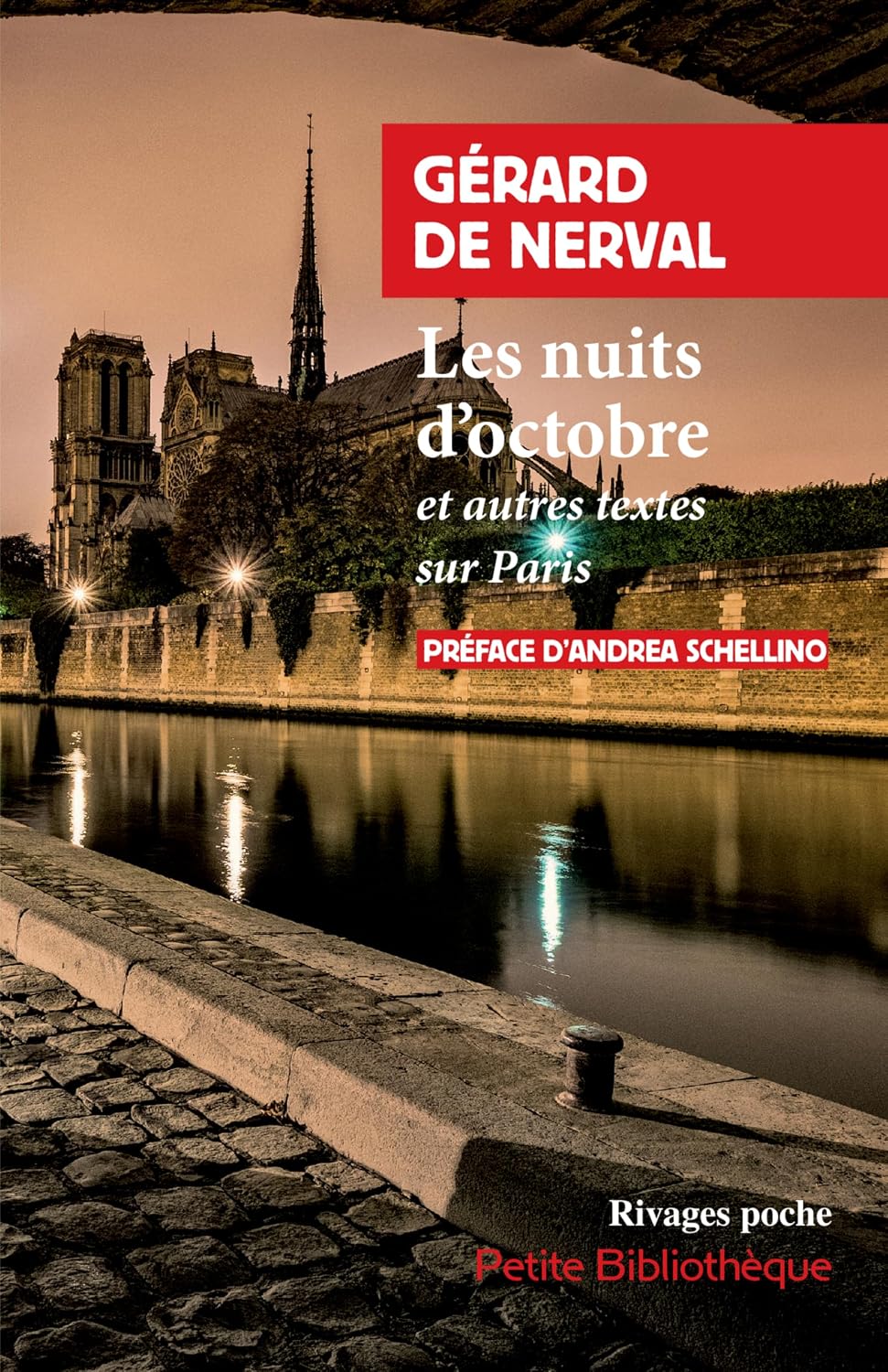
Gérard de Nerval: Experiencing Paris After Dark
Recommended reading: Les Nuits d’octobre (October Nights)
What happens to a city when its ordinary daytime rhythms disappear? Gérard de Nerval (1808–1855), born in Paris, offers a fascinating answer in Les Nuits d’octobre, a literary account of nocturnal wanderings through the capital.
The text takes readers into the streets, cafés and busy central districts of Paris, including the area around Les Halles. Nerval observes the people he encounters and the strange, sometimes comic, sometimes melancholic atmosphere of the city after dark.
His Paris is not simply a collection of monuments. It is a living world of conversations, chance encounters, unusual characters and unexpected discoveries.
Why read Nerval in French?
Nerval is an excellent choice for readers who enjoy exploring a city on foot and noticing the small details that make a place unique. His writing combines observation, humour and imagination, inviting readers to see familiar streets in a different light.
As you read, imagine following in his footsteps through central Paris, stopping at a café, watching the city change as evening falls, and listening to the conversations around you.
Georges Perec: Discovering the Everyday Paris of the 1960s
Recommended reading: Les Choses (Things: A Story of the Sixties)
Georges Perec (1936–1982), born in Paris, was one of the most original French writers of the twentieth century. His work often focuses on the details of everyday life, revealing how ordinary objects, habits and surroundings can tell us a great deal about society.
Published in 1965, Les Choses follows a young couple, Jérôme and Sylvie, whose dreams and ambitions are shaped by consumer culture. They long for beautiful objects, stylish interiors and a more comfortable life, yet their desires continually exceed their means.
Paris provides the setting for their aspirations and frustrations. Its apartments, shops and neighbourhoods reflect the changing values of French society during the 1960s.
Why read Perec in French?
Perec is a particularly interesting author for language learners because he invites readers to pay attention to the words used to describe objects, interiors, habits and everyday experiences.
His book also encourages an intriguing question: how much do the things we own influence the way we imagine happiness?
For students living in Paris, the novel offers an opportunity to compare the aspirations of a young couple in the 1960s with the lifestyle and consumer culture of the city today.
Jean-Paul Sartre: Discovering the Making of a Writer
Recommended reading: Les Mots (The Words)
Jean-Paul Sartre (1905–1980), born in Paris, was one of the most influential French philosophers and writers of the twentieth century. His autobiography, Les Mots, published in 1964, looks back on his childhood and the experiences that shaped his relationship with literature.
Sartre describes growing up in a family environment where books played a central role. Through reading, imagination and his early attempts at writing, he gradually constructs an image of himself as a future author.
The Paris of his childhood, particularly the world of family life and intellectual culture, provides the backdrop to this personal journey. The book is less a guide to individual monuments than a portrait of how a young Parisian developed a lifelong passion for words.
Why read Sartre in French?
Les Mots is a rewarding choice for students interested in the power of reading itself. It explores how books influence our understanding of the world and how language can shape our identity.
Sartre’s reflections also offer an opportunity to discover sophisticated vocabulary, irony and a more philosophical style of writing. Intermediate and advanced students may particularly enjoy the challenge.
Perhaps, after reading his autobiography, you will be inspired to think about your own relationship with books, and about how learning French might change the way you see the world.
How to Choose the Right French Book for Your Level
You do not need to be fluent in French to begin exploring French literature. The secret is to choose a book that matches your interests and your current level of understanding.
Here are a few tips to help you get started:
If you are a beginner: Start with short extracts. Read a little at a time, focus on the general meaning and avoid looking up every unfamiliar word.
If you are an intermediate learner: Try a novel with a clear narrative, such as Zola’s Au Bonheur des Dames, or explore selected passages from Nerval or Perec. Keep a vocabulary notebook and note expressions that you could use in everyday conversations.
If you are an advanced learner: Challenge yourself with Proust, Madame de La Fayette or Sartre. Pay attention to sentence structure, literary style, irony and the cultural references that give these works their depth.
Whatever your level of French, reading becomes much more enjoyable when you choose a subject that genuinely interests you. A historical novel, a love story or an account of everyday life can all become valuable learning tools.
You can also combine reading with discussing a chapter with classmates at ACCORD or visiting the places mentioned in a story. These activities help connect written French with spoken communication.
From the Pages of a Book to the Streets of Paris
Un livre en français, une promenade dans Paris, et la langue prend vie !
One of the greatest pleasures of reading French literature in Paris is discovering the places behind the stories. Imagine walking through the historic streets of the Île de la Cité after reading Eugène Sue, or exploring the grand shopping districts associated with Zola.
You might find yourself looking at a Parisian café differently after reading Nerval or noticing the details of an apartment and its furnishings after reading Perec. Literature can transform a simple walk into a cultural experience. It helps you understand not only what Paris looks like, but also how people have lived, thought, dreamed and expressed themselves there across the centuries.
Of course, not every literary location survives, and some authors combine real places with fictional settings. That is part of the fascination: books allow you to discover both the Paris that existed and the Paris that writers imagined.
And as you explore the city, you will encounter countless opportunities to practise French naturally: reading signs, ordering coffee, asking for directions, visiting museums and talking to people you meet along the way.
Learn French in Paris with ACCORD
Reading French books is a wonderful way to improve your language skills, but combining literature with a linguistic stay in France can make the experience even more rewarding.
At ACCORD French language school, located near the Eiffel Tower in Paris, you can study French in an international environment while experiencing the language in the city where so many writers found their inspiration.
Our French courses cater to different levels (from complete beginner to advanced level) and learning objectives, giving you the opportunity to develop your vocabulary, improve your grammar, strengthen your listening comprehension and gain confidence in speaking French.
What you learn in the classroom can then be put into practice throughout Paris. A visit to a bookshop, a conversation in a café or a walk through a historic neighbourhood becomes another opportunity to use French in a real-life situation.
You could even choose a book from our list, read a chapter before your stay and then explore the Parisian locations associated with its story. It is a wonderful way to combine language learning, literature and cultural discovery.
Ready to discover French through books and experience the city that inspired generations of writers?
Explore the ACCORD Paris French language courses and make your stay in France an opportunity to improve your French, discover French culture and fall in love with the language, one page at a time.
