

The Gardens of Paris: A Selection by ACCORD Paris Students
All it takes is a ray of sunshine and a blue sky for Paris to reveal its best side. Between two French classes, it’s hard to resist the pull of shaded lawns, ponds where little wooden sailboats drift by, and tree-lined paths flanked by century-old statues. The French capital is full of parks, gardens, and squares, each with its own history and atmosphere. Here’s a selection of the Parisian gardens most loved by students at ACCORD French language school, spanning royal heritage, scientific botany, and everyday Parisian relaxation. (In an upcoming post, we’ll share our students’ favorite parks too, stay tuned!)
Tuileries Garden
Let’s start with the Tuileries Garden, whose name comes quite simply from the tile factories (“tuileries”) that once stood on this land, before Queen Catherine de’ Medici had a palace built here in 1564, long since gone, but whose name stuck to the garden that replaced it. It was the famous landscape architect André Le Nôtre who, from 1664 onward, gave the garden the look we know today: the geometric, symmetrical style known as the “jardin à la française,” or French formal garden (**). Stretching between the Louvre and Place de la Concorde, the Tuileries is one of the most beloved places to stroll in Paris, for locals and ACCORD students alike, who love wandering among sculptures by Maillol, Rodin, and Giacometti.
(**) The “jardin à la française,” perfected by André Le Nôtre, is defined by its geometric layout and perfect symmetry. The Tuileries and the Luxembourg Gardens are both classic examples. The “jardin à l’anglaise,” or English garden, by contrast, embraces a wilder, more natural look with irregular shapes, as seen at Parc Monceau and Parc Montsouris.
Palais Royal Garden
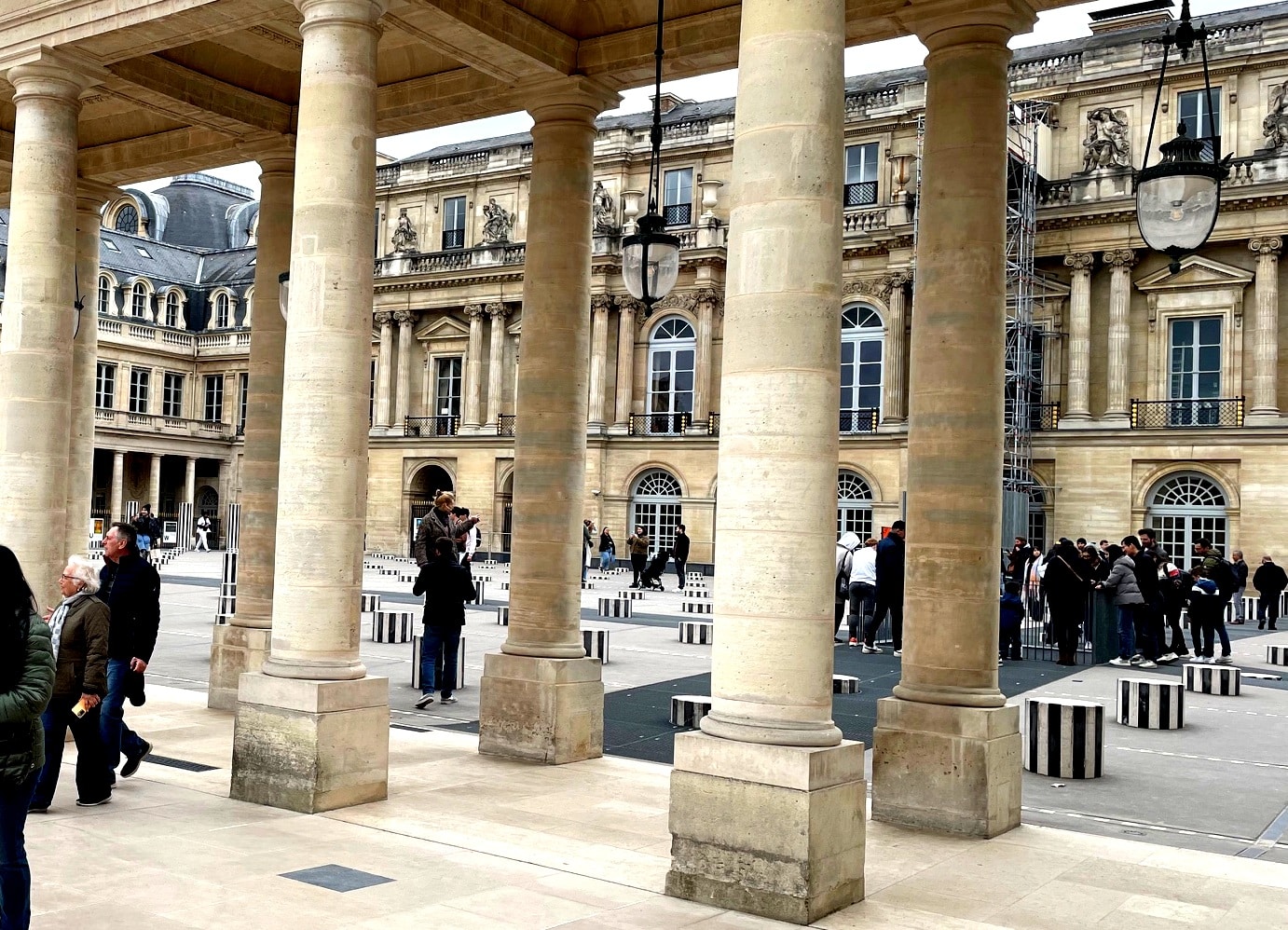
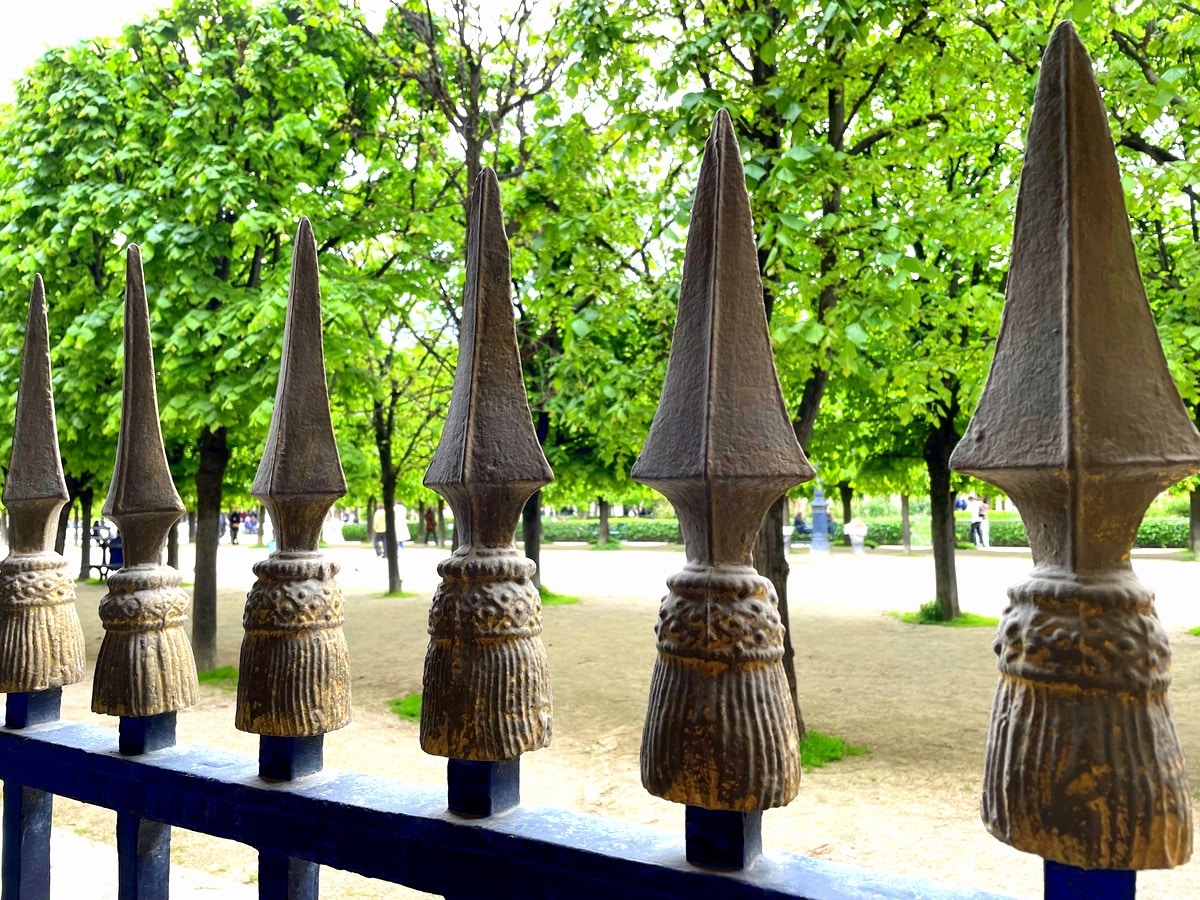
Just steps from the Louvre, the Palais Royal Garden was created in 1633 by Cardinal Richelieu. It served as home to the royal family for years before they relocated to Versailles. Today, this elegant, peaceful garden is framed by remarkable architecture that stays firmly rooted in the present, with striking contemporary artwork throughout. Its best-known feature is the Buren Columns, a work by artist Daniel Buren installed in the courtyard next to the garden, near the Ministry of Culture: black-and-white striped octagonal columns that have become one of the most photographed symbols of Paris.
Jardin des Plantes
In the heart of Paris, the Jardin des Plantes offers a genuine slice of nature. This botanical garden, founded four centuries ago, still serves its original dual purpose: advancing scientific research and welcoming the public. Between its remarkable trees, statues, and pathways, it offers visitors a varied and beautifully preserved place to wander, complete with a few hidden, quiet corners. Across its 2.5 hectares of “jardin à la française,” you can lose yourself among plants from every corner of the world, get a first taste of botany, or admire trees loaded with history, including a pistachio tree that’s 315 years old, the garden’s silent elder.
Luxembourg Gardens
On the edge of Saint-Germain-des-Prés and the Latin Quarter, the Luxembourg Gardens were inspired by Florence’s Boboli Gardens and created in 1612 at the request of Queen Marie de’ Medici. Across its 25 hectares, the garden combines a French formal section and an English-style section, divided by a geometric forest and a large central pond. There’s also an orchard of rare, heirloom apple varieties, a small apiary for learning about beekeeping, greenhouses housing a breathtaking orchid collection, and a rose garden. The park counts no fewer than 106 statues, the monumental Medici Fountain, an Orangerie, and the Davioud Pavilion. It’s also a lively meeting place where Parisians and ACCORD students alike play chess, tennis, or bridge, or watch wooden sailboats glide across the pond. Culturally, the garden regularly hosts free open-air photography exhibitions along its railings, plus concerts at the bandstand.
Champs-Élysées Gardens
The Champs-Élysées Gardens stretch from Place de la Concorde to the Rond-Point des Champs-Élysées, flanking Paris’s most famous avenue on both sides. While their current layout dates back to 1840, their origins go back to the 17th century. In their most wooded section, they hold plenty of surprises: statues, fountains, and a bandstand, must-see museums (the Grand Palais, Petit Palais, and Palais de la Découverte), performance venues (Théâtre Marigny, Théâtre du Rond-Point, Théâtre de Guignol), and celebrated restaurants (Pavillon Ledoyen, Restaurant Laurent). Between majestic trees and colorful flowerbeds, it’s an essential stop for Parisians and ACCORD students alike.
A Student’s Tip
Barbara, a German student at ACCORD, shares her favorite spot: “Above all, don’t forget to visit the oldest tree in Paris — a black locust planted in 1601. For more than four centuries, it has stood proudly in Square René-Viviani, right in the heart of the Latin Quarter, and it truly is a striking sight to see.”
Your Turn to Explore
These gardens are just a glimpse of Paris’s green riches, each with its own atmosphere, its own history, and its own quiet invitation to slow down for a while. The best way to discover them? Lace up comfortable shoes, step out of the classroom between two French lessons, and let the paths guide you. And since learning French in Paris doesn’t stop at the classroom door, every one of these gardens doubles as the perfect place to practice: ask for directions, strike up a conversation with a Parisian feeding the pigeons, or simply listen to the French being spoken around you as you read a few pages in the shade of a tree.
So, which garden will be first on your list?
